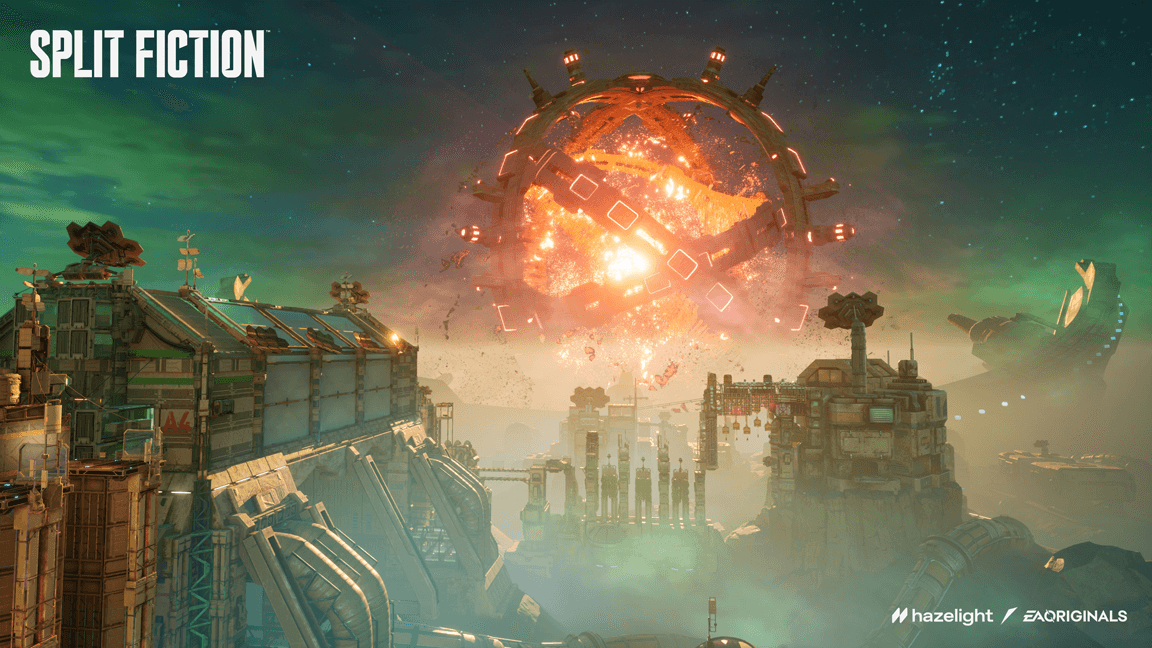
Two Screens, Two Realities
The split-screen in Split Fiction isn't just a camera choice; it's the entire point of the game. Hazelight realized that when you're playing couch co-op, you spend half your time looking at your partner's screen anyway. They built puzzles around this habit. There are moments where the only way to navigate an invisible maze on your screen is to look at your partner's screen, where the walls are clearly marked. It's a brilliant subversion of screen-cheating. The game constantly plays with this dynamic, forcing you to reconcile the gritty sci-fi reality of Mio's world with the magical fantasy of Zoe's to progress.
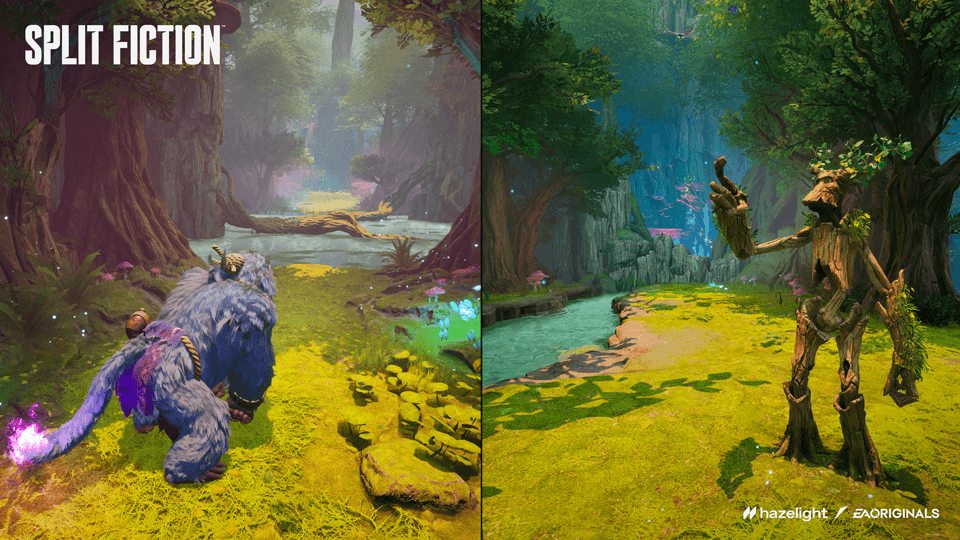
The Hazelight Formula
If you played A Way Out or It Takes Two, you know the pacing here. Hazelight refuses to let you get bored. The second you master a mechanic, they throw it away and hand you a new one. It's a risky design philosophy because not every swing connects. There's a 20-minute section involving controlling magnetic polarities that frustrated us more than it challenged us. But for every miss, there are five mechanics that feel polished enough to carry their own standalone game. The sheer volume of bespoke, one-off gameplay segments is staggering.